Coverage: California (approx. 80% of state load; excludes LADWP, SMUD, and other municipal utilities)
California's grid is defined by the "duck curve" — massive midday solar generation followed by a steep evening ramp as solar drops and evening demand peaks. The region spans coastal marine-layer climates in the west to extreme heat in the Central Valley and inland deserts. Summer heat waves drive record air conditioning loads. Wildfire risk is elevated in fall when Diablo and Santa Ana wind events create critical fire weather, triggering Public Safety Power Shutoffs (PSPS) that can cut power to hundreds of thousands. Annual hydropower availability swings significantly with snowpack and drought conditions.
Temperature Forecast
Observed and forecast temperature maps, anomalies, and degree-day accumulations.
Temperature normals based on NOAA 1991–2020 U.S. Climate Normals.
Precipitation Chance
Quantitative precipitation estimates, totals, and probabilistic outlooks across the region.
Data from NWS API. Auto-refreshes every 4 hours. Shows all available forecast days from NWS and extended gridpoint data.
Extreme Heat Watch issued September 30 at 3:05AM PDT until October 7 at 9:00PM PDT by NWS San Diego CA
San Diego County Coastal Areas; San Bernardino and Riverside County Valleys-The Inland Empire; San Diego County Inland Valleys; Santa Ana Mountains and Foothills; Orange County Coastal; Orange County Inland
Expires: 9/30/2026, 10:00:00 PM
Coastal Flood Advisory issued September 30 at 2:02AM PDT until September 30 at 5:00PM PDT by NWS San Diego CA
San Diego County Coastal Areas; Orange County Coastal
Expires: 9/30/2026, 10:00:00 PM
Coastal Flood Advisory issued September 29 at 2:54PM PDT until October 1 at 5:00PM PDT by NWS San Francisco CA
San Francisco; North Bay Interior Valleys; San Francisco Bay Shoreline; Northern Monterey Bay; Southern Monterey Bay and Big Sur Coast
Expires: 9/30/2026, 11:00:00 PM
Beach Hazards Statement issued September 29 at 1:45PM PDT until September 30 at 5:00PM PDT by NWS Los Angeles/Oxnard CA
Catalina and Santa Barbara Islands; Ventura County Beaches; Malibu Coast; Los Angeles County Beaches
Expires: 10/1/2026, 12:00:00 AM
Beach Hazards Statement issued September 29 at 1:45PM PDT until September 30 at 5:00PM PDT by NWS Los Angeles/Oxnard CA
Santa Barbara County Southwestern Coast; Santa Barbara County Southeastern Coast
Expires: 10/1/2026, 12:00:00 AM
Life-safety notice: Weather Workbench is informational only. Always verify life-safety decisions against your local NWS forecast office at weather.gov.
| Metric | Actual | Normal | Departure |
|---|---|---|---|
| CDD | 1436.1 | 1347.8 | +88.3 |
| HDD | 796.5 | 1096.6 | -300.1 |
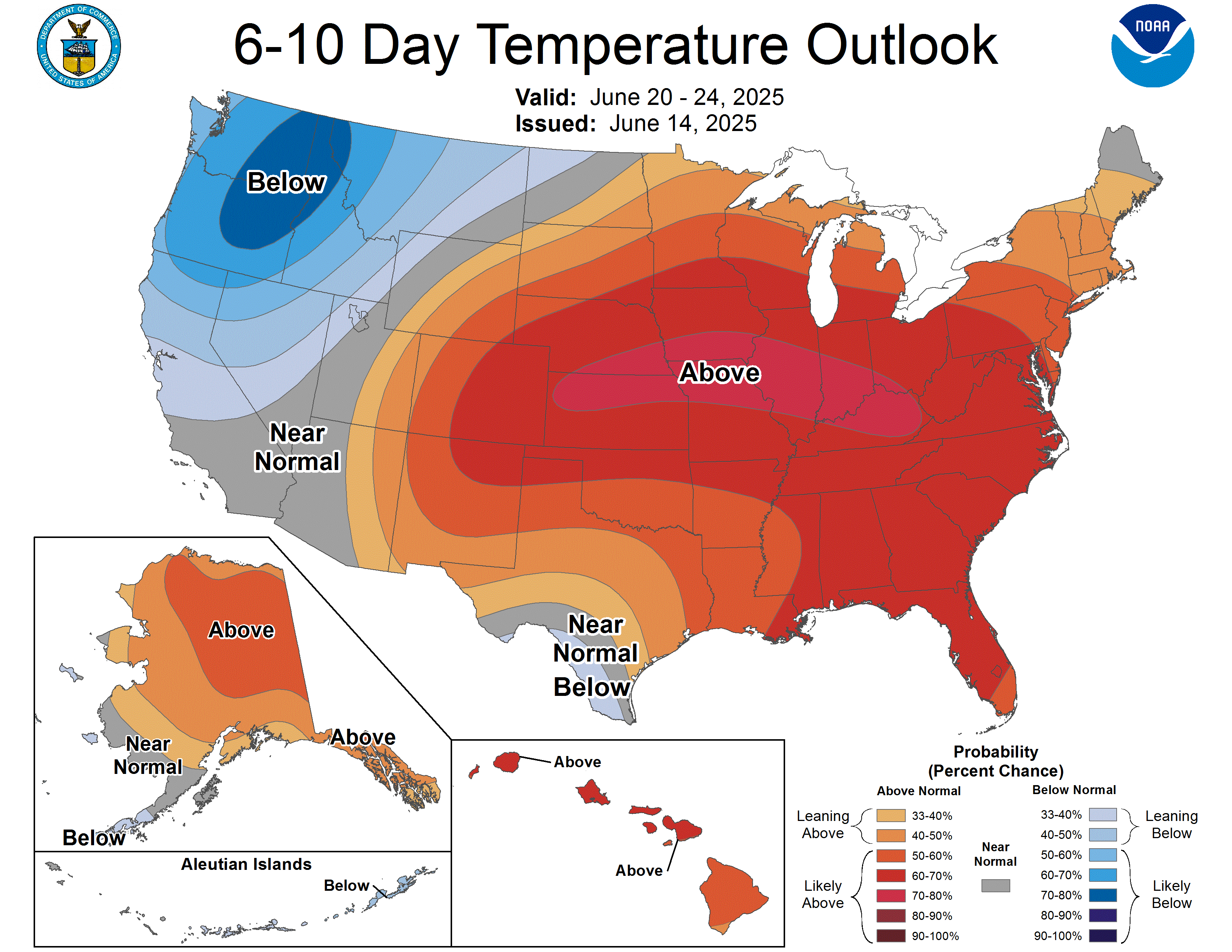
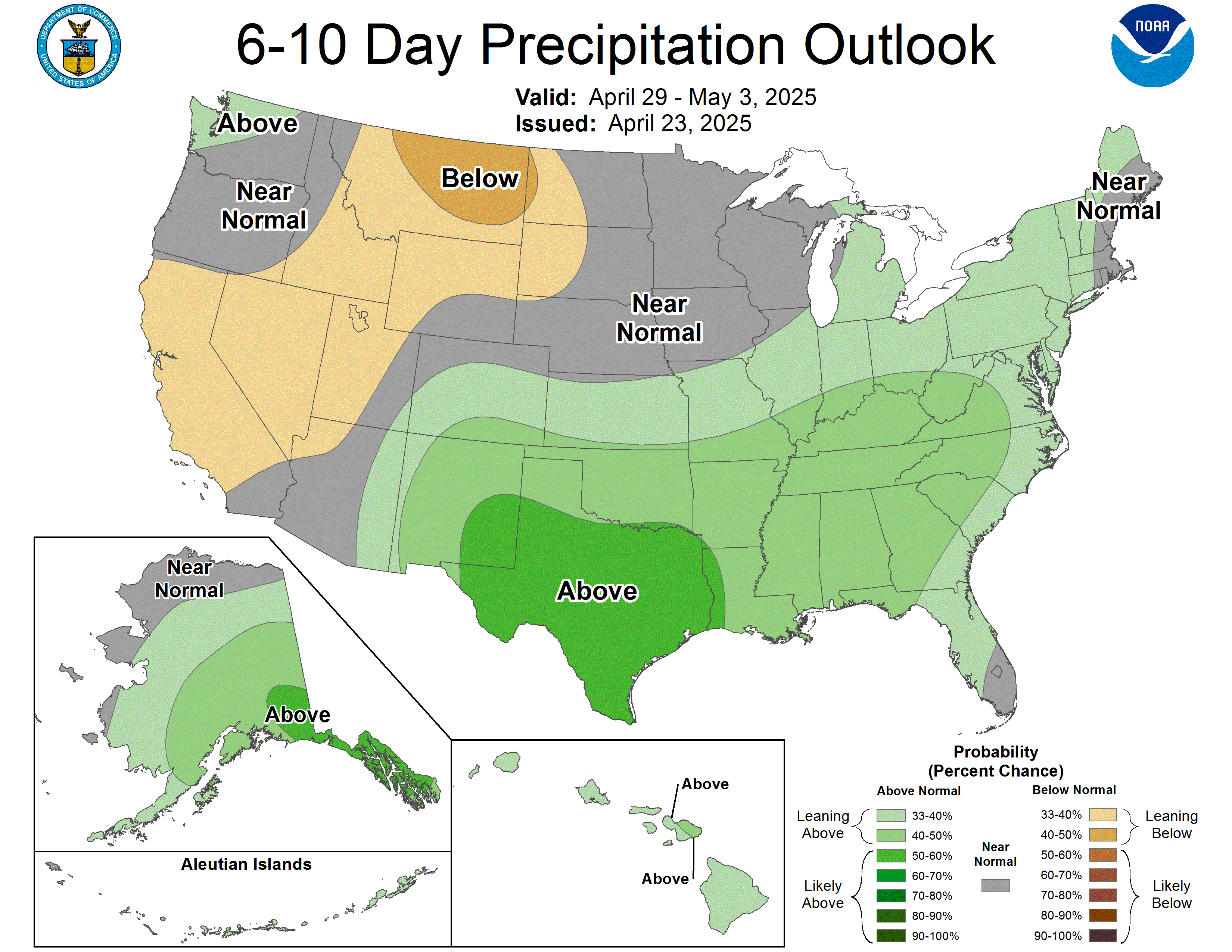
Source: NOAA Climate Prediction Center
Short- and medium-range weather outlooks from official and model-based forecast products.

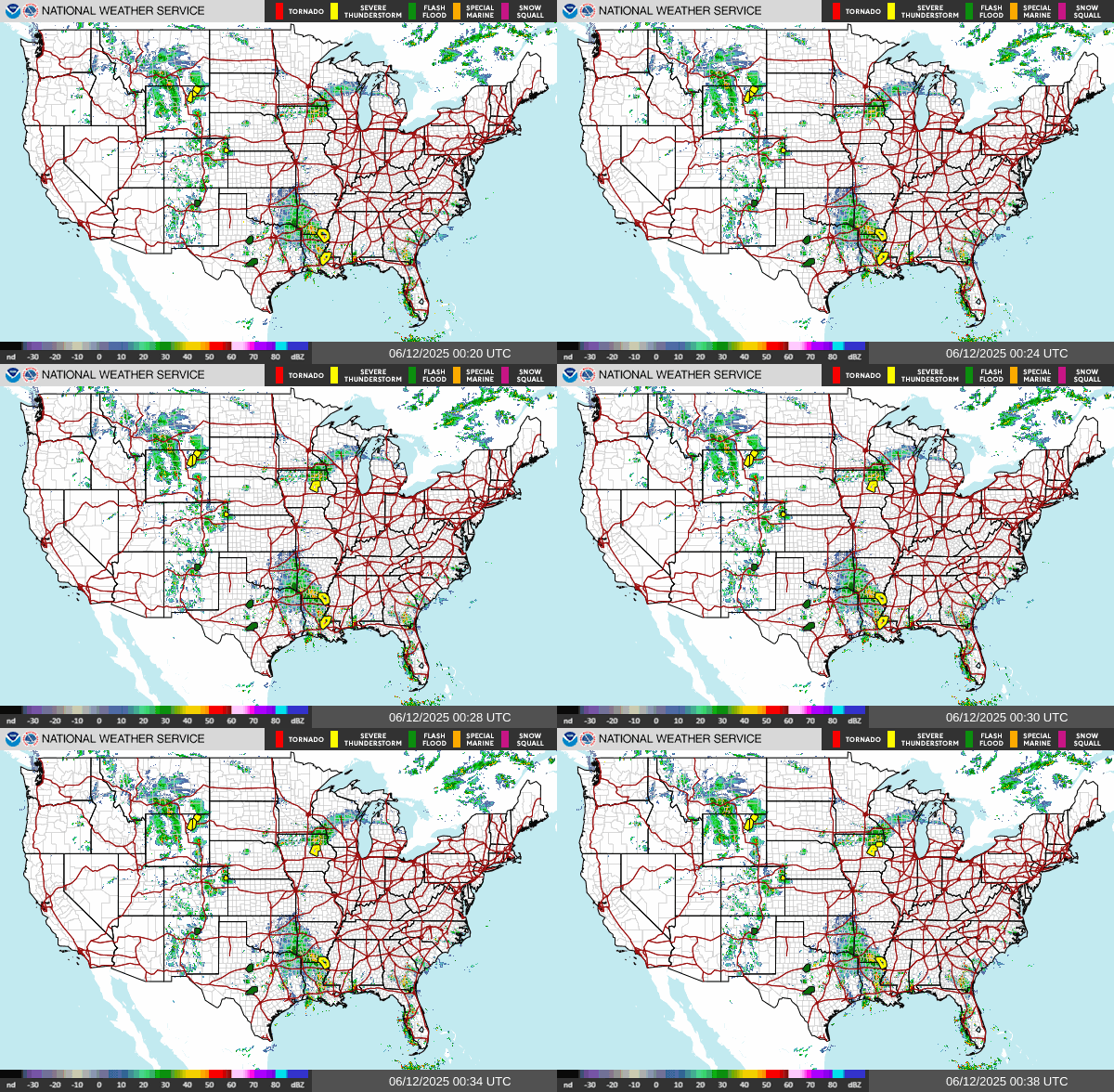
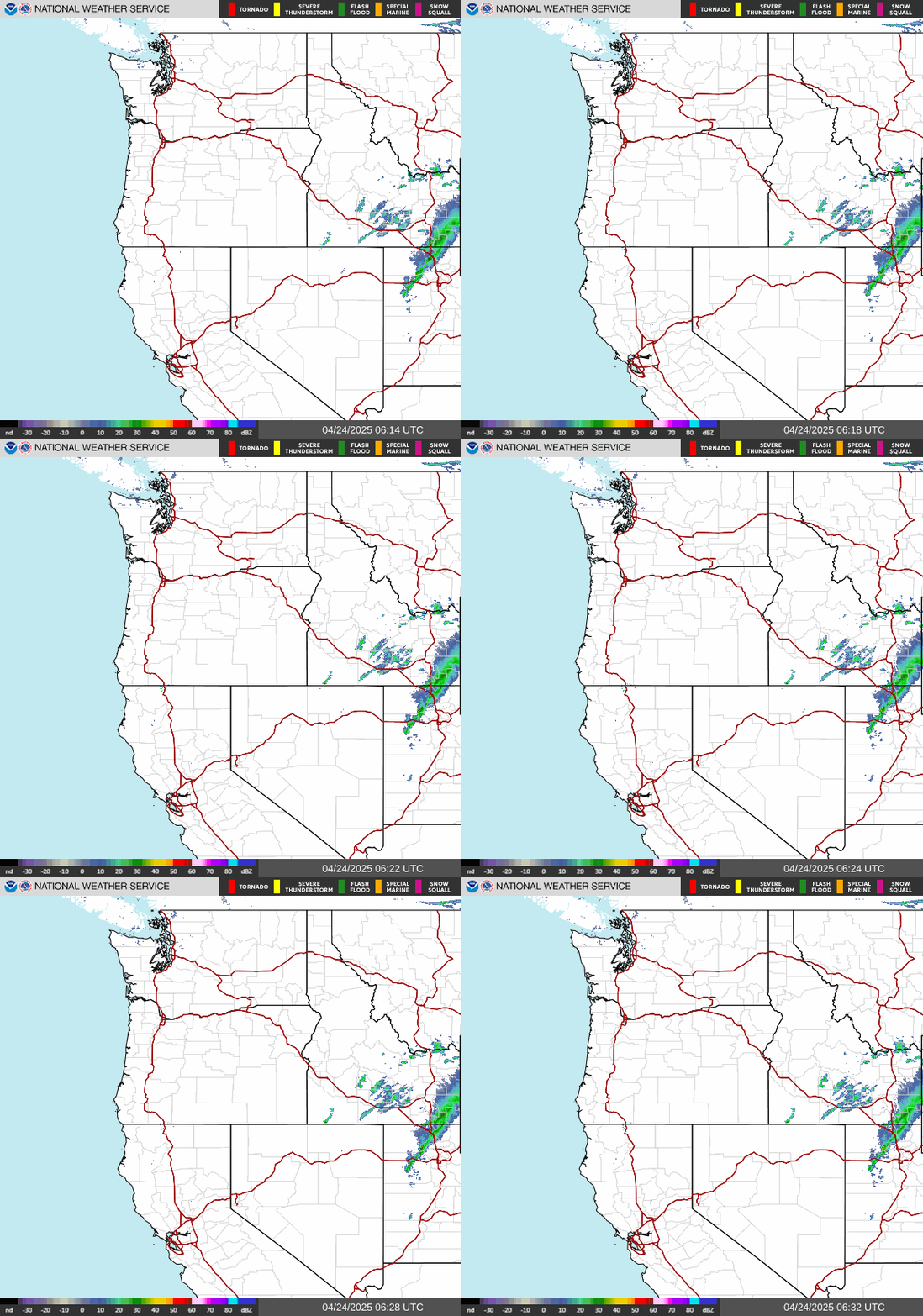
Live and looping NEXRAD radar imagery showing current precipitation and storm structure.
GOES satellite imagery capturing cloud cover, moisture, and convective activity.

NHC track forecasts, storm outlooks, and tropical satellite imagery for active and potential cyclones.

Numerical weather prediction output from GFS, NAM, ECMWF, and other operational models.
Raw GRIB2 data feeds and gridded analysis products for downstream processing.
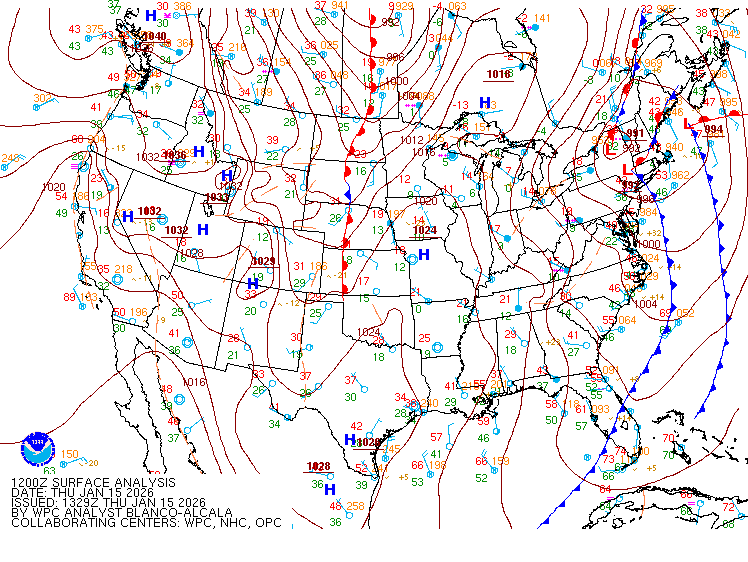
Synoptic surface charts depicting fronts, pressure systems, and analyzed weather boundaries.
Weekly U.S. Drought Monitor classifications and long-range moisture deficit trends.

CAISO (California ISO) — Frequently Asked Questions
Background on the CAISO footprint, the weather drivers that shape its grid, and the National Weather Service alerts that signal stress on the system.
All Sources for CAISO
We use cookies for analytics and to show ads from Google. You can accept all cookies or reject non-essential ones. See our Privacy Policy for details.