Coverage: Texas (~90% of state load across 254 counties; excludes far West Texas and small municipal utilities connected to other grids)
ERCOT operates as an electrical island with minimal interconnections to neighboring grids — meaning Texas cannot easily import power during emergencies, as demonstrated during Winter Storm Uri (February 2021). The region sees some of the nation's highest summer peak loads, driven by extreme heat and humidity across Dallas–Fort Worth, Houston, San Antonio, and Austin. West Texas and the Panhandle host massive wind farms, making ERCOT the U.S. leader in installed wind capacity. Winters are typically mild but vulnerable to Arctic outbreaks that stress a generation fleet built for heat, not cold.
Temperature Forecast
Observed and forecast temperature maps, anomalies, and degree-day accumulations.
Temperature normals based on NOAA 1991–2020 U.S. Climate Normals.
Precipitation Chance
Quantitative precipitation estimates, totals, and probabilistic outlooks across the region.
Data from NWS API. Auto-refreshes every 4 hours. Shows all available forecast days from NWS and extended gridpoint data.
Flood Warning issued September 30 at 6:59AM CDT until September 30 at 2:00PM CDT by NWS Amarillo TX
Deaf Smith, TX; Oldham, TX; Potter, TX; Randall, TX
Expires: 9/30/2026, 7:00:00 PM
Flood Warning issued September 30 at 6:58AM CDT until September 30 at 1:45PM CDT by NWS Amarillo TX
Deaf Smith, TX; Randall, TX
Expires: 9/30/2026, 6:45:00 PM
Flood Warning issued September 30 at 6:55AM CDT until September 30 at 9:15AM CDT by NWS Amarillo TX
Randall, TX
Expires: 9/30/2026, 2:15:00 PM
Flood Advisory issued September 30 at 6:54AM CDT until September 30 at 9:15AM CDT by NWS Amarillo TX
Armstrong, TX; Randall, TX
Expires: 9/30/2026, 2:15:00 PM
Flood Watch issued September 30 at 5:53AM MDT until October 1 at 6:00AM MDT by NWS Midland/Odessa TX
Borden; Scurry; Howard; Mitchell; Glasscock; Reagan; Terrell
Expires: 9/30/2026, 8:30:00 PM
Flood Warning issued September 30 at 6:52AM CDT until September 30 at 2:45PM CDT by NWS Amarillo TX
Potter, TX; Randall, TX
Expires: 9/30/2026, 7:45:00 PM
Rip Current Statement issued September 30 at 6:38AM CDT until October 1 at 12:00PM CDT by NWS Houston/Galveston TX
Matagorda Islands; Brazoria Islands; Galveston Island; Bolivar Peninsula
Expires: 10/1/2026, 11:45:00 AM
Flood Watch issued September 30 at 6:38AM CDT until October 1 at 7:00AM CDT by NWS Lubbock TX
Stonewall
Expires: 9/30/2026, 9:00:00 PM
Flash Flood Warning issued September 30 at 5:56AM CDT until September 30 at 7:30AM CDT by NWS Lubbock TX
Castro, TX; Lamb, TX; Parmer, TX; Swisher, TX
Expires: 9/30/2026, 12:30:00 PM
Flood Watch issued September 30 at 5:45AM CDT until October 2 at 1:00AM CDT by NWS San Angelo TX
Fisher; Nolan; Sterling; Coke; Runnels; Irion; Tom Green; Concho; Crockett; Schleicher; Sutton; Haskell; Throckmorton; Jones; Shackelford; Taylor; Callahan; Coleman; Brown; McCulloch; San Saba; Menard; Kimble; Mason
Expires: 10/1/2026, 12:00:00 PM
Flash Flood Warning issued September 30 at 5:01AM CDT until September 30 at 7:45AM CDT by NWS Amarillo TX
Potter, TX; Randall, TX
Expires: 9/30/2026, 12:45:00 PM
Flood Watch issued September 30 at 4:40AM CDT until October 2 at 7:00AM CDT by NWS Fort Worth TX
Montague; Cooke; Grayson; Fannin; Young; Jack; Wise; Denton; Collin; Hunt; Stephens; Palo Pinto; Parker; Tarrant; Dallas; Rockwall; Kaufman; Eastland; Erath; Hood; Somervell; Johnson; Ellis; Comanche; Mills; Hamilton; Bosque; Hill; Navarro; Lampasas; Coryell; Bell; McLennan; Falls; Limestone; Milam
Expires: 9/30/2026, 9:00:00 PM
Flood Watch issued September 30 at 2:33AM CDT until October 1 at 1:00PM CDT by NWS Norman OK
Seminole; Hughes; Garvin; Murray; Pontotoc; Coal; Jefferson; Carter; Johnston; Atoka; Love; Marshall; Bryan; Wichita; Baylor; Archer; Clay
Expires: 9/30/2026, 9:45:00 PM
Heat Advisory issued September 29 at 11:54PM CDT until September 30 at 7:00PM CDT by NWS Corpus Christi TX
Jim Wells; Inland Kleberg; Inland Nueces; Inland San Patricio; Coastal Kleberg; Coastal Nueces; Coastal San Patricio
Expires: 10/1/2026, 12:00:00 AM
Flood Watch issued September 29 at 11:44PM CDT until October 2 at 7:00PM CDT by NWS Corpus Christi TX
La Salle; McMullen; Live Oak; Bee; Webb; Duval; Jim Wells; Inland Kleberg; Inland Nueces; Inland San Patricio
Expires: 10/3/2026, 12:00:00 AM
Flood Watch issued September 29 at 11:09PM CDT until September 30 at 1:00PM CDT by NWS Amarillo TX
Cimarron; Texas; Dallam; Sherman; Hansford; Hartley; Moore; Hutchinson; Oldham; Potter; Carson; Deaf Smith; Randall; Armstrong; Palo Duro Canyon
Expires: 9/30/2026, 6:00:00 PM
Flood Watch issued September 29 at 5:47PM CDT until October 2 at 7:00PM CDT by NWS Austin/San Antonio TX
Llano; Burnet; Williamson; Val Verde; Edwards; Real; Kerr; Bandera; Gillespie; Kendall; Blanco; Hays; Travis; Bastrop; Kinney; Uvalde; Medina; Bexar; Comal; Guadalupe; Caldwell; Maverick; Zavala; Frio; Atascosa; Wilson; Gonzales; Dimmit
Expires: 9/30/2026, 8:15:00 PM
Life-safety notice: Weather Workbench is informational only. Always verify life-safety decisions against your local NWS forecast office at weather.gov.
| Metric | Actual | Normal | Departure |
|---|---|---|---|
| CDD | 3379.5 | 2539.2 | +840.3 |
| HDD | 752.9 | 1151.9 | -399.0 |
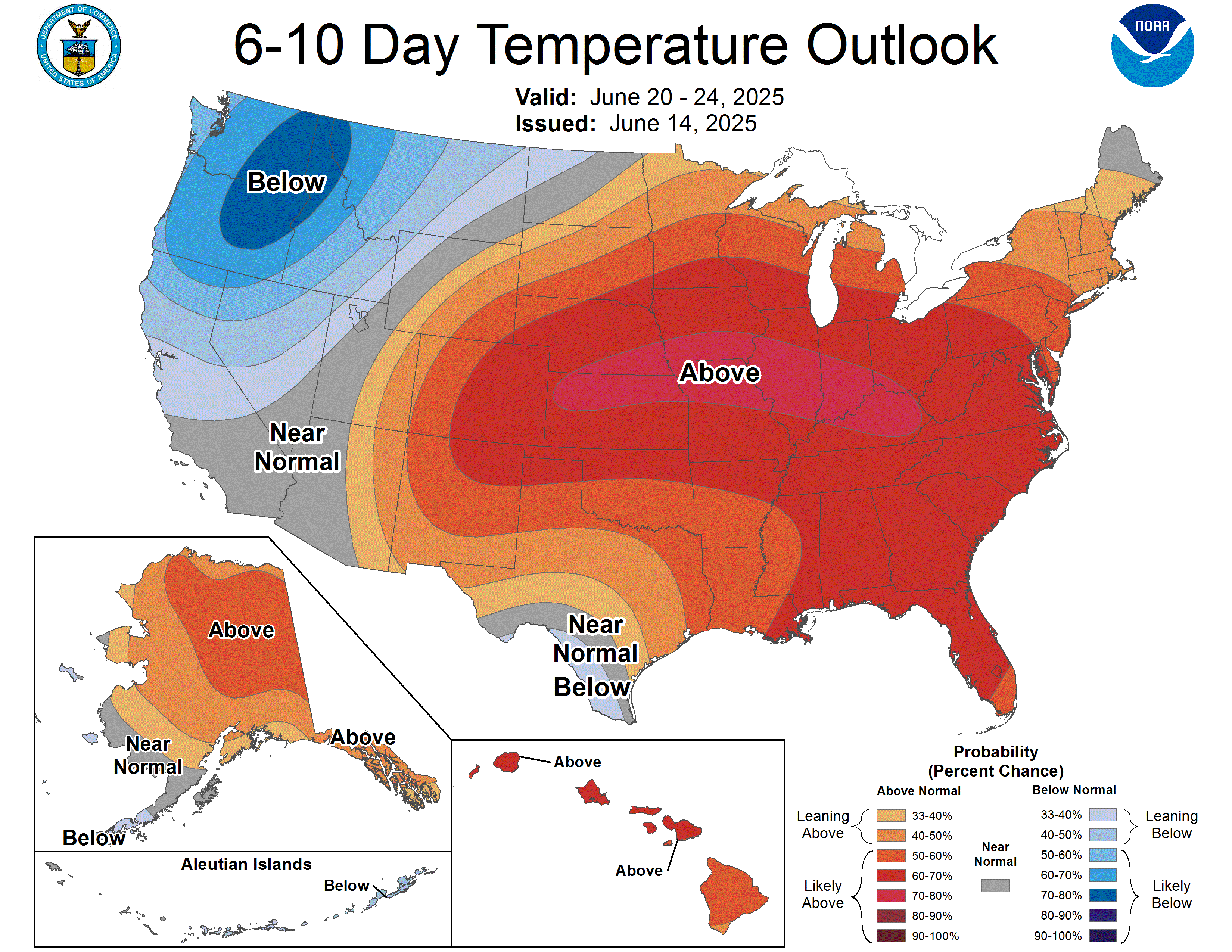
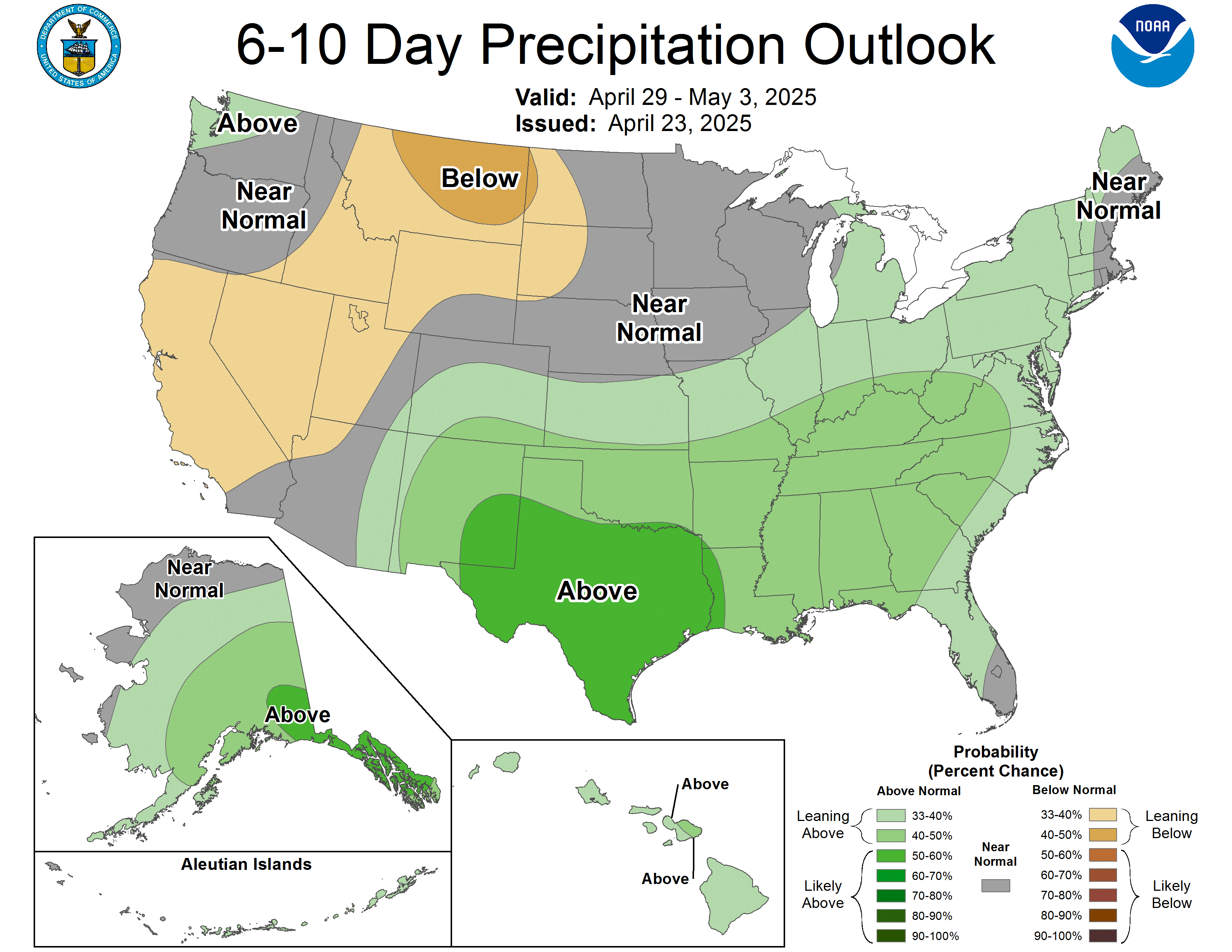
Source: NOAA Climate Prediction Center
Short- and medium-range weather outlooks from official and model-based forecast products.

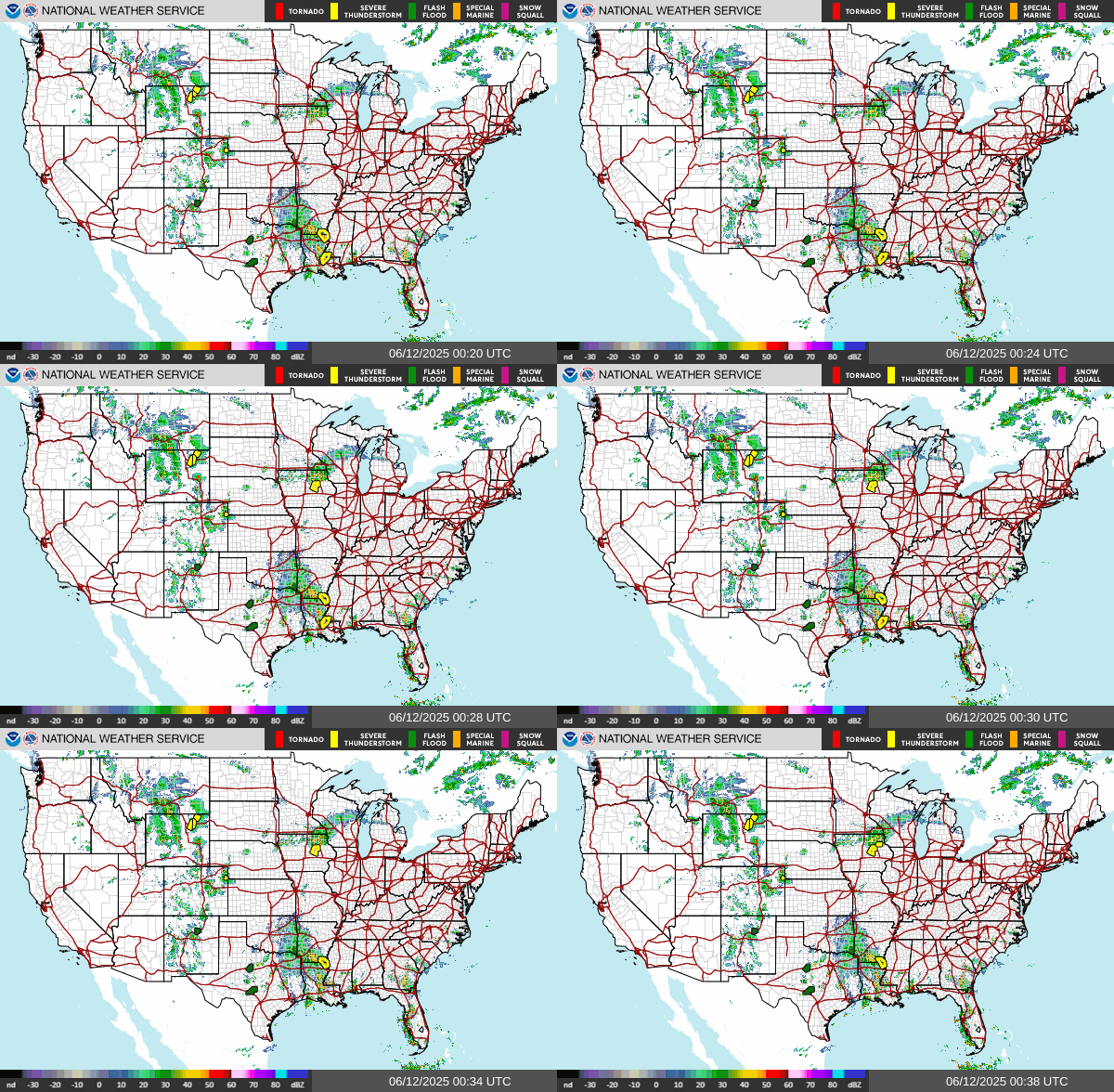
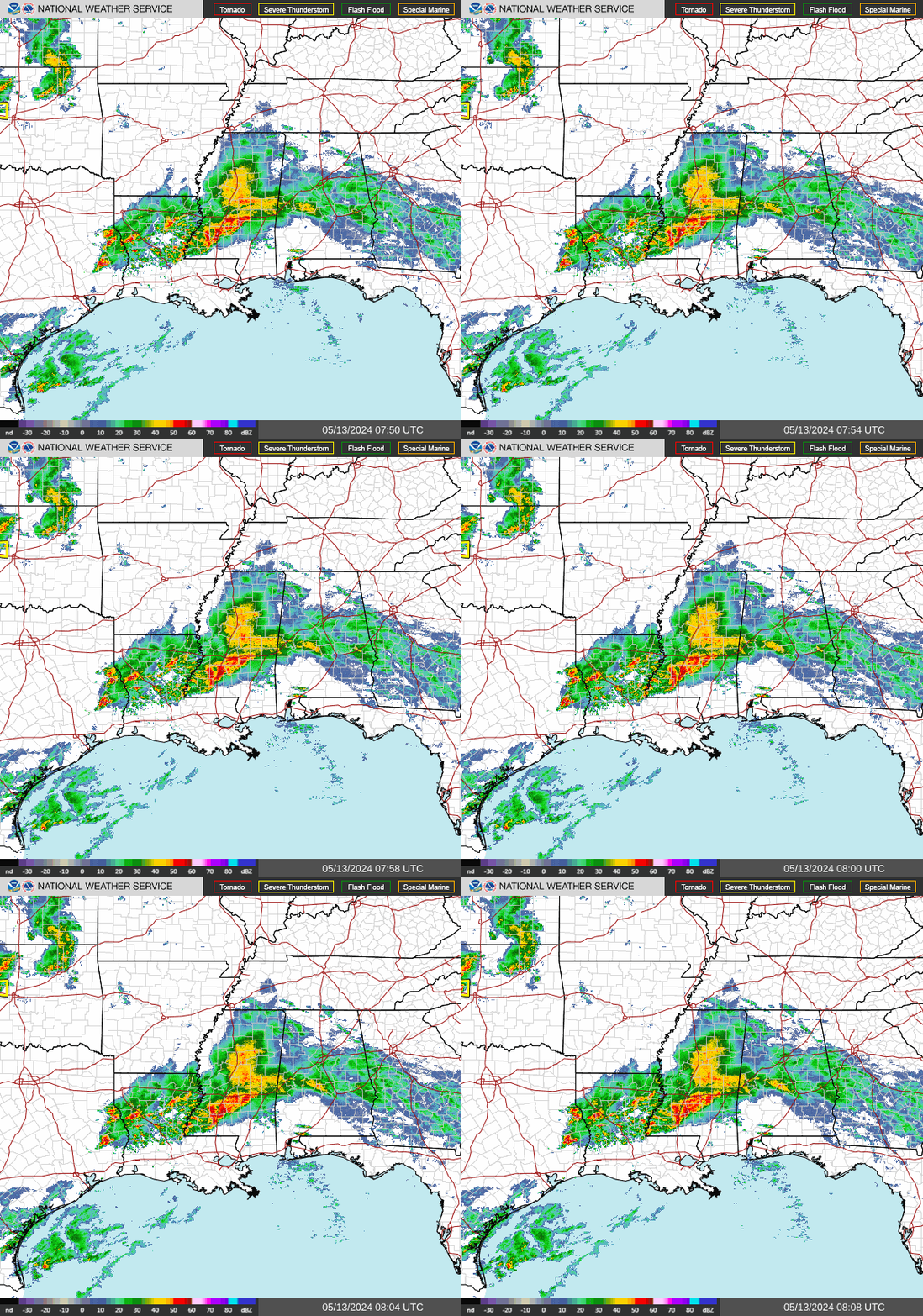
Live and looping NEXRAD radar imagery showing current precipitation and storm structure.
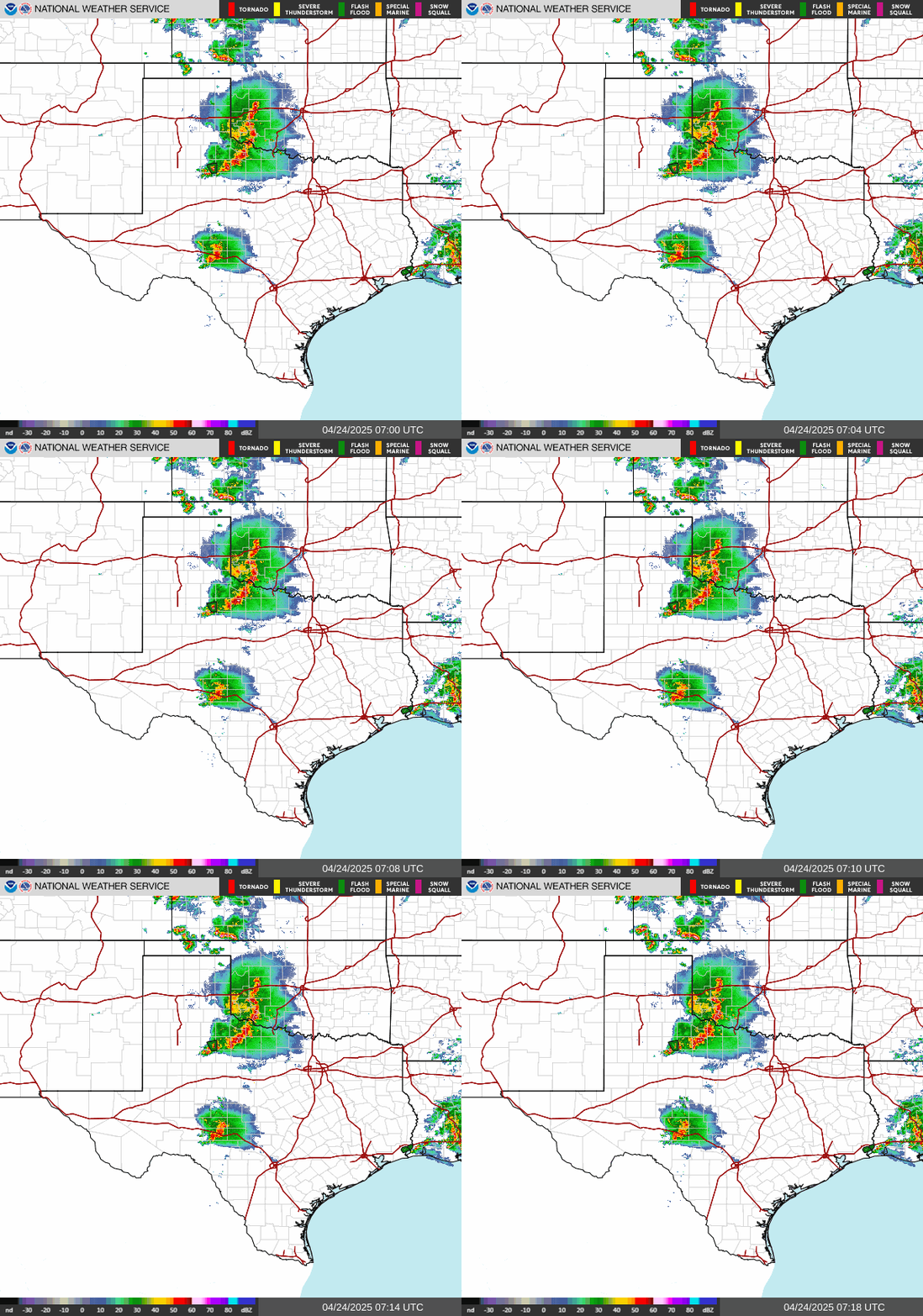
GOES satellite imagery capturing cloud cover, moisture, and convective activity.

NHC track forecasts, storm outlooks, and tropical satellite imagery for active and potential cyclones.

Numerical weather prediction output from GFS, NAM, ECMWF, and other operational models.
Raw GRIB2 data feeds and gridded analysis products for downstream processing.
Synoptic surface charts depicting fronts, pressure systems, and analyzed weather boundaries.
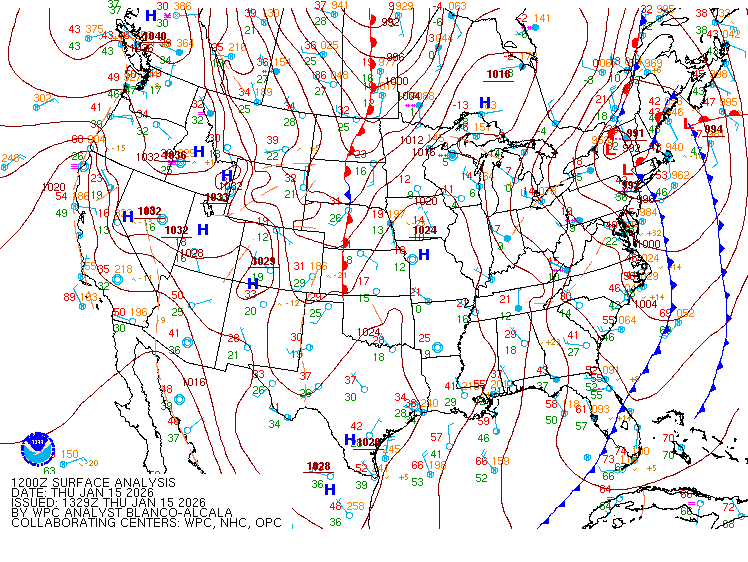
Weekly U.S. Drought Monitor classifications and long-range moisture deficit trends.

ERCOT (Electric Reliability Council of Texas) — Frequently Asked Questions
Background on the ERCOT footprint, the weather drivers that shape its grid, and the National Weather Service alerts that signal stress on the system.
All Sources for ERCOT
We use cookies for analytics and to show ads from Google. You can accept all cookies or reject non-essential ones. See our Privacy Policy for details.